Overview.
Zeromoblt is a student mobility platform designed to make school transportation safer, shorter, and more transparent for families.
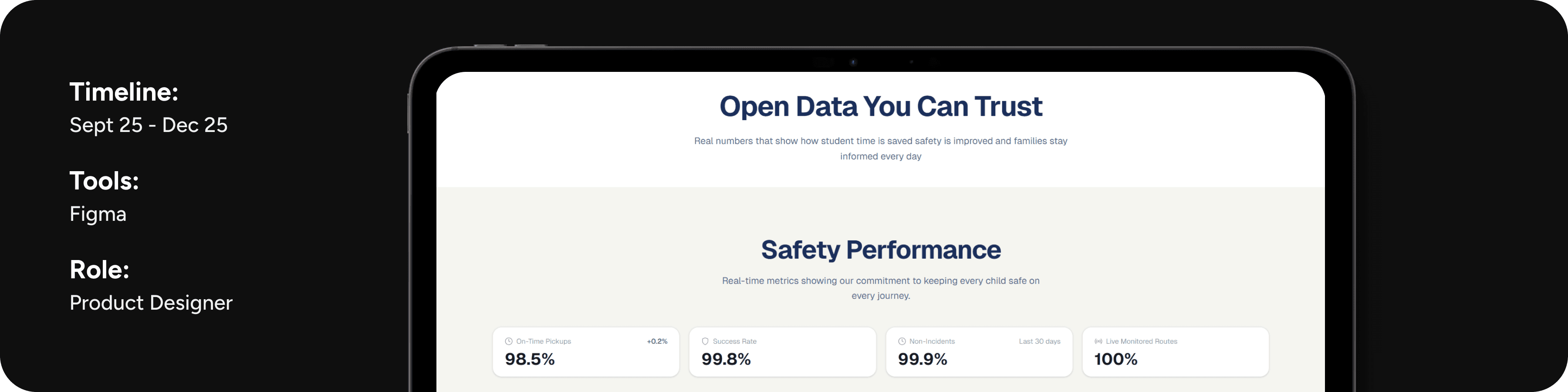
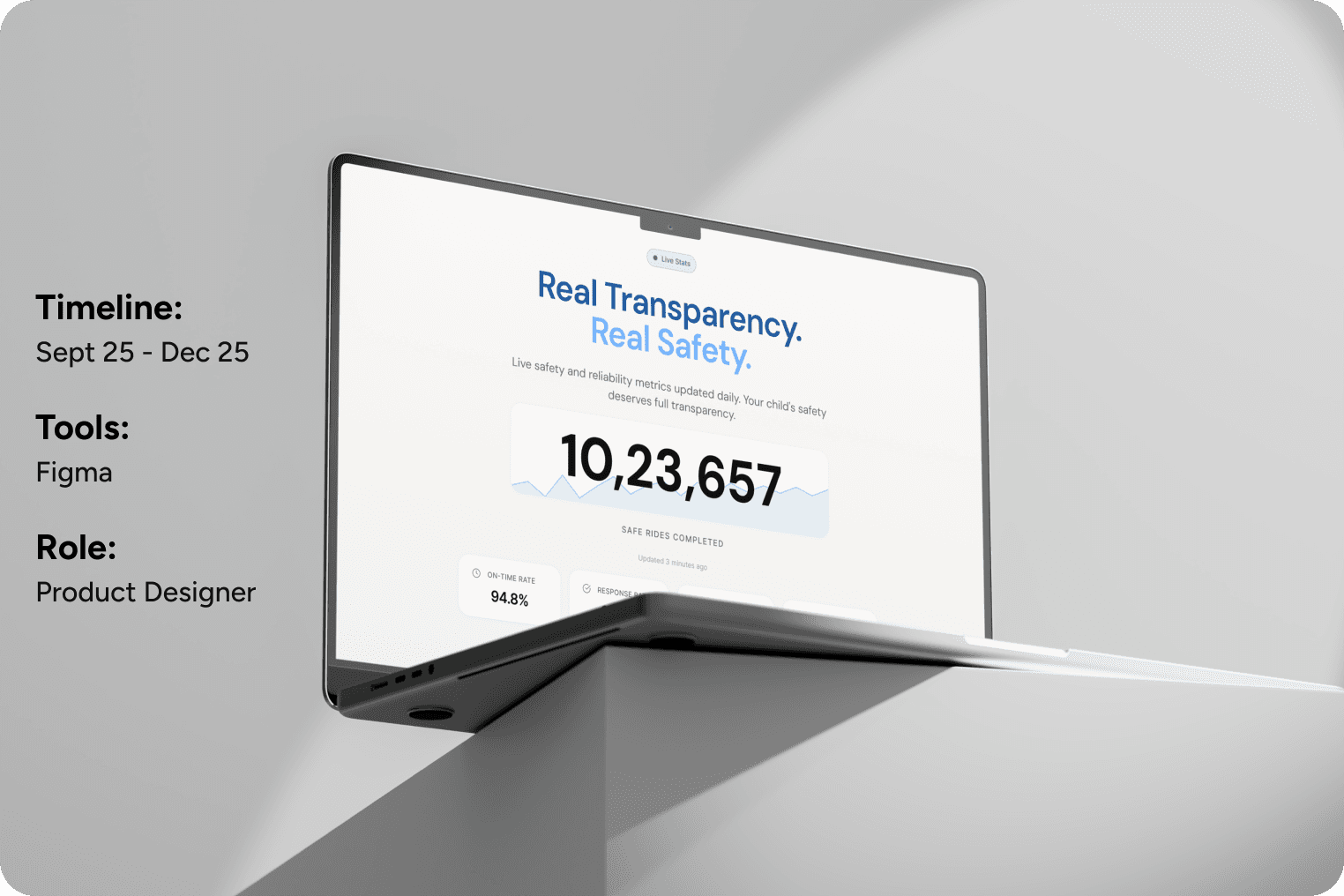
The Open Data page is ZeroMoblt's public transparency dashboard a live, real-time view of safety metrics, trip reliability, driver assurance, and rider registrations. It exists to answer one question that every parent silently carries: can I actually trust these people with my child?
Most companies publish claims. We publish proof.
Challenge.
The challenge wasn't technical. It was emotional. How do you design a page that feels like transparency rather than just looks like it?
"Parents don't come to a data page for numbers. They come to answer one question is my child safe with you?"
The existing platform had no dedicated transparency page. Data existed internally but was never surfaced to parents in a way that addressed their actual anxiety. The brief was to build it with no prior template, and a working founder requirement to ship fast.
Approach.
Phase 01
Parent’s Anxiety
Before deciding what data to show, I asked: what is a parent actually feeling when they land here? Not curious anxious. Specifically anxious about safety, about who is with their child, about whether the service is real and accountable. That emotional map became the page structure.
Phase 02
Most data dashboards organize by data type. This page organizes by the sequence of questions a parent asks. Safety first. Then who the driver is. Then whether rides are reliable. Then growth and legitimacy signals. Each section earns the right to the next.
Phase 03
Live over Static
A static page says 'here's our record.' A live page says 'watch us right now.'
For a parent checking if their child's ride is on time in the same mental state as someone tracking a cab in traffic live metrics feel fundamentally different. They feel like presence, not documentation.
The Decisions.
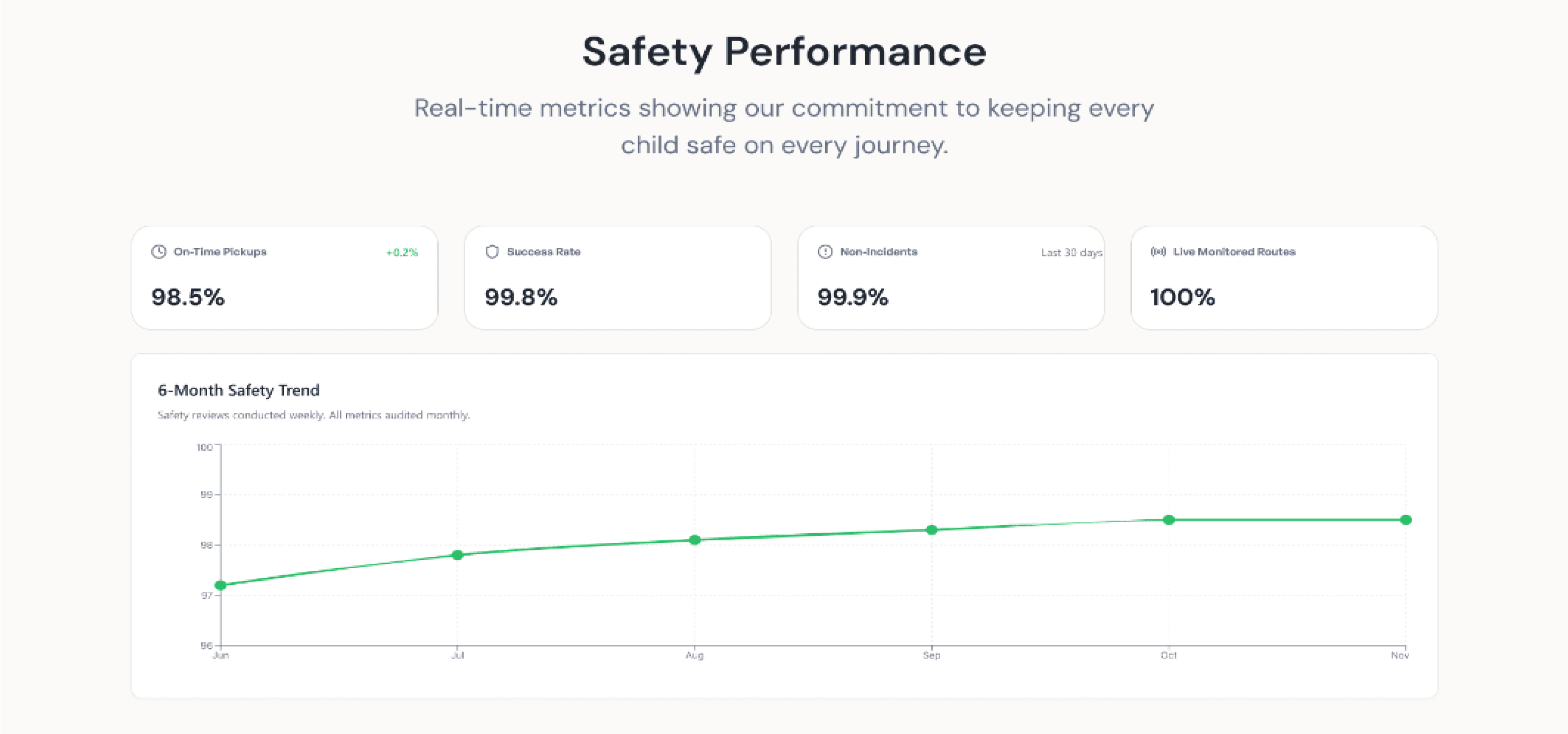
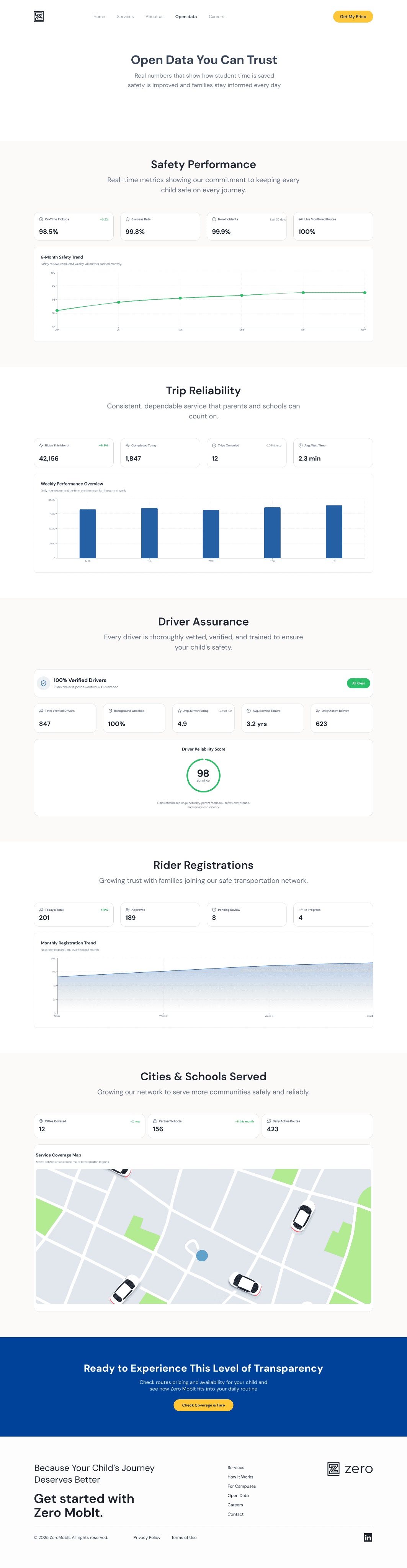
Safety First, always!: The page leads with Safety Performance. On-time pickups, non-incident rate, live monitored routes. This wasn't just hierarchy it was a deliberate choice to meet the parent's anxiety before asking them to scroll.
“When a parent opens this page, the first thing they need to feel is: this company takes my child's safety seriously enough to publish it publicly.”
Live metrics over static stats: Every metric on this page updates in real time. The decision came from a simple analogy if a food delivery app showed you a static 'estimated arrival' instead of live tracking when you’re extremely hungry, how would you feel? A parent checking on their child's ride is in the same state. Anxious, time-pressured, needing real signal.
Static numbers are claims. Live numbers are proof.
Metrics that speak human: 98.5% on-time. 99.9% live monitored routes. 0.03% cancellation rate. These aren't just numbers they're answers to specific parental anxieties. Each metric was chosen because it maps to a real question a parent asks, not because it was available in the database.
Comparison.
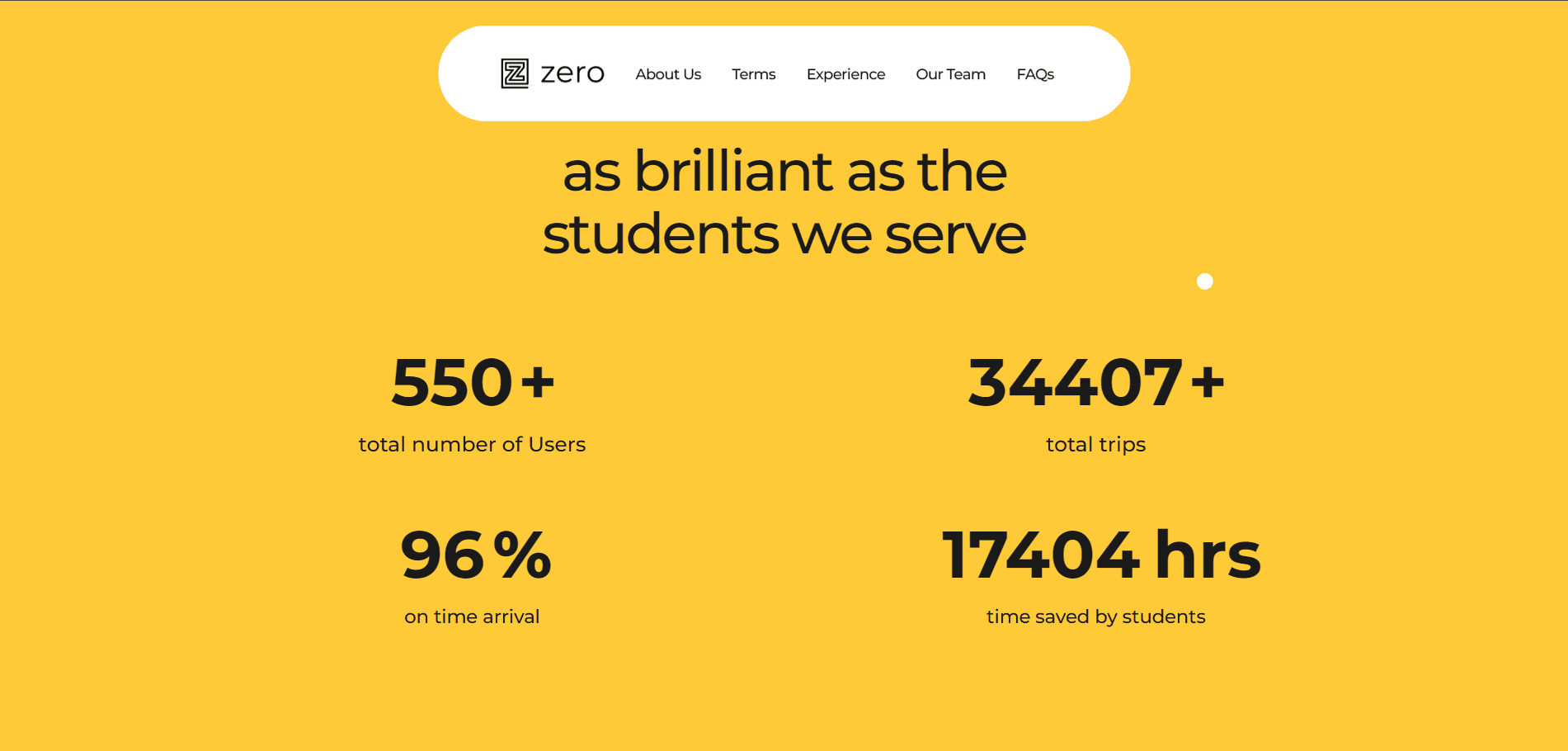
Before
No transparency page. Broken template copy. Parents had no way to verify trust.
After
Live transparency dashboard. Safety first. Every metric answers a parent's real question.
The existing platform had no transparency layer. Parents had no way to verify the service was real, safe, or accountable. The Open Data page was built to answer that silence.
Interface.
Learnings.
Anxiety is an information architecture problem:
The order you show information in isn't a visual decision it's an emotional one. A parent landing on this page has a specific sequence of fears. Design that ignores that sequence, no matter how visually clean, will feel wrong.
Live data changes the relationship:
There's a fundamental difference between a company that publishes a record and a company that shows you what's happening right now. One is accountability. The other is presence. Designing for presence requires different decisions than designing for documentation.
Reflection reveals what documentation can't:
Reconstructing the decisions afterward and finding that I'd reorder sections if I built it again showed me that reflection is its own form of design thinking. The gap between what you built and what you'd build now is where growth lives.
Working to a brief doesn't mean working without thinking:
This was founder-driven, fast-moving, no formal research. But within those constraints, every structural decision came from a genuine question about the parent's experience. Constraints don't prevent good thinking they just make it harder to see.
Conclusion.
This is a Collaborative Project!
This case study covers the Open Data page, which I owned end to end from structure and information hierarchy to visual decisions and copy. I also contributed to the sitemap, UI components, visual and text styles, and the employee directory in careers page.
What you see at zeronow.in is the result of that collaboration, two designers with different strengths working toward the same goal: a platform that parents could actually trust.
My lane was transparency. Making data feel human. Answering the question a parent carries silently every morning before their child gets in a vehicle.